MATERIALS
Check before you cut
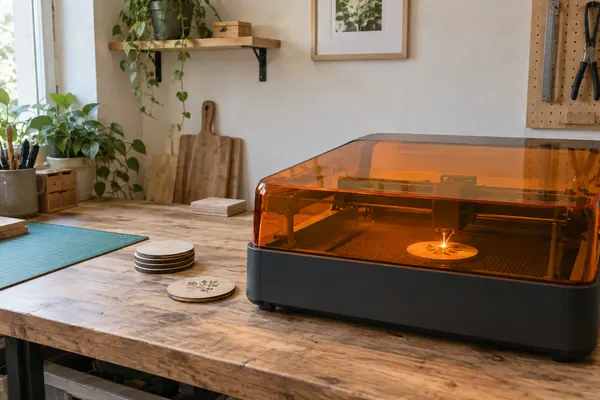
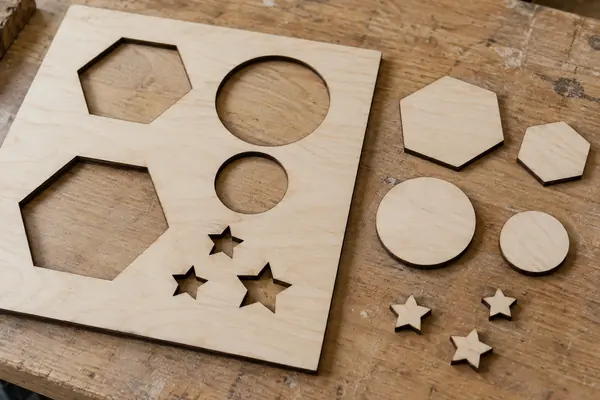
Makerspace lists allow laser-safe plywood, MDF, acrylic, card and real leather, and ban PVC, vinyl, ABS, polycarbonate and HDPE.
Check a material laserdoodle
00WHAT THE MAKERSPACE RULES SAY
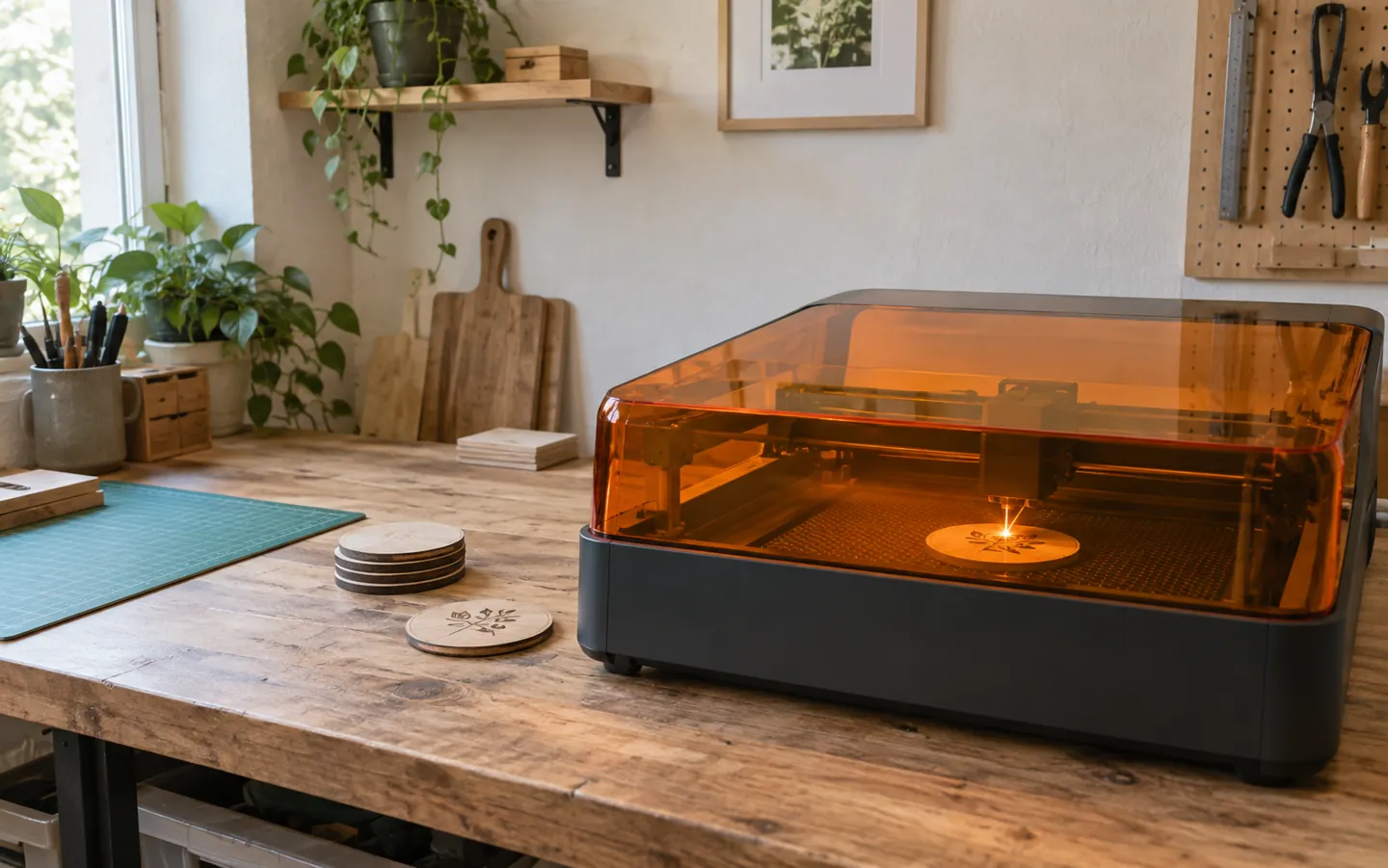
A laser cutter draws with heat, so the material matters.
University makerspaces publish strict lists of what may and may not go under the beam. They agree on a few rules: keep the enclosure and interlocks working, vent the fumes, never cut PVC, and never walk away while it runs.
Check a material01Principles
02THE SHORT ANSWER
Most laser cutter problems come from three things:
the wrong material, the fumes and fire.
MATERIALS
Makerspace lists allow laser-safe plywood, MDF, acrylic, card and real leather, and ban PVC, vinyl, ABS, polycarbonate and HDPE.
Check a materialFUMES
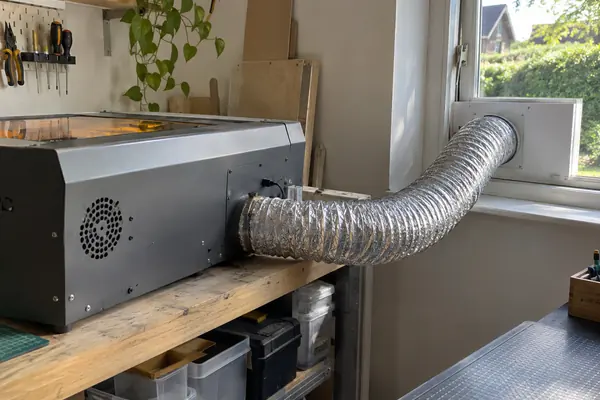
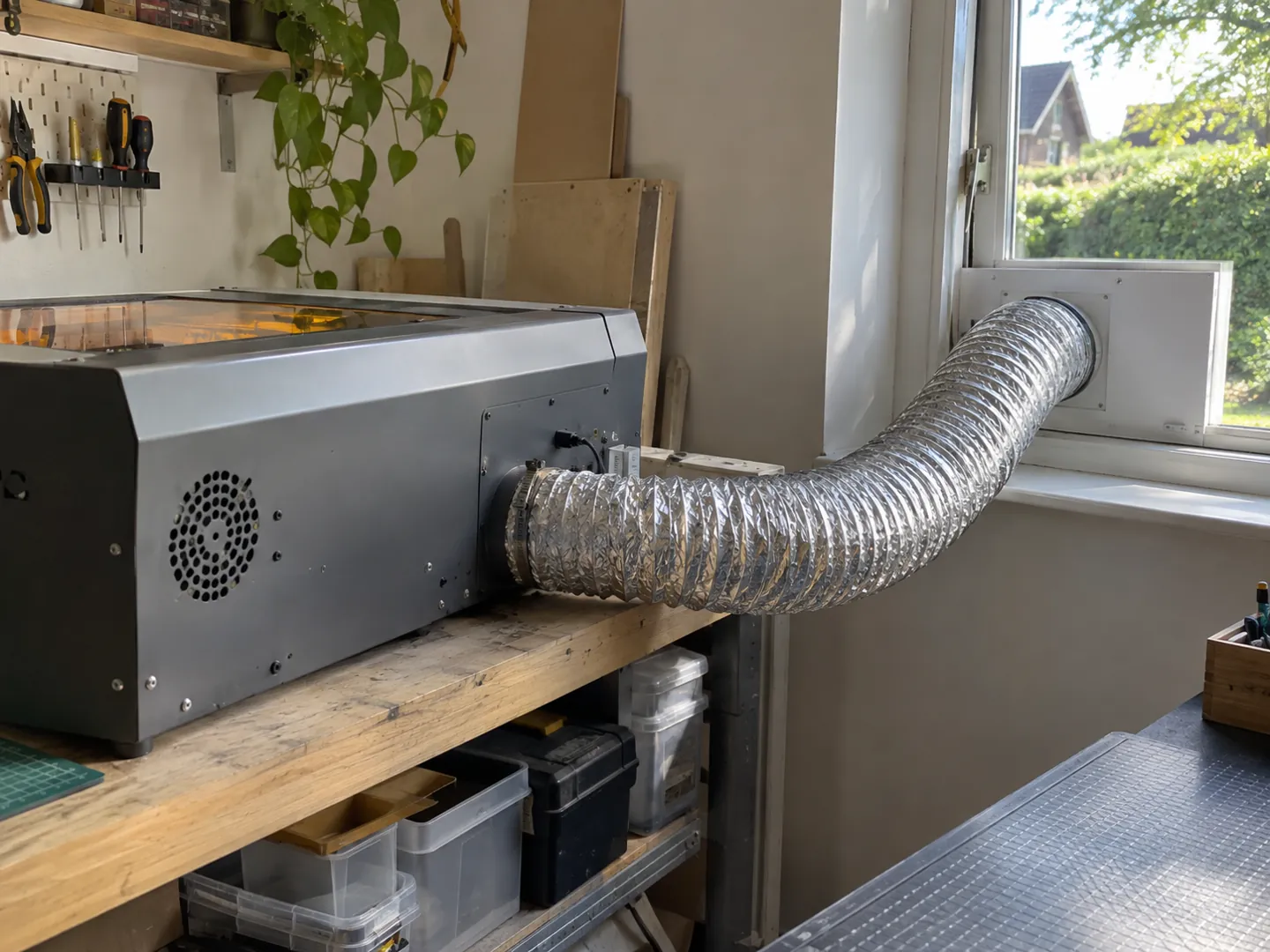
Cutting produces particles and gases. Guidance asks for dedicated ventilation, filters changed on schedule, and exhaust kept away from occupied areas.
Set it upFIRE
The beam's heat can ignite the stock. MIT and UMass Lowell both say never leave a laser cutter unattended while it runs.
See the numbers03A QUICK MATERIAL CHECK
Pick a material to see what university makerspace rules say about it. The bar shows how strongly the guidance warns against it.
Based on Illinois, UC Merced, MIT and UMass Lowell guidance. Always follow your machine's manufacturer's list.
04TWO NUMBERS WORTH KNOWING
Why the lid matters:
what is inside is far stronger than what reaches you.
10,600 nm
Wavelength of a typical CO2 cutter laser
UMass Lowell says cutters typically use CO2 lasers at 10,600 nm, which are invisible to the eye, so the laser could be on without the operator knowing.
INVISIBLE BEAM · UMASS LOWELL
500+ mW
Output power above which a laser is Class 4
UKHSA says Class 4 lasers can harm eyes and skin, even by diffuse reflection, and are often a fire hazard. The enclosed laser in a cutter is normally Class 3B or 4.
CLASS 4 · UKHSA
Illinois explains that interlocks let a laser cutter be classed as Class 1, the lowest, inherently safe class, even though the laser inside is normally Class 3B or 4.
05FOUR HABITS FROM THE GUIDES
These come straight from university laser cutter rules. They apply equally to a machine in a garage or a spare room.
Never defeat the interlocks, and do not run a machine that is damaged or has unprotected openings.
Use the dedicated ventilation the manufacturer specifies and clean or change filters on schedule.
Clear debris from the cutting deck, and keep the lens clean so residue does not bake on and crack it.
Never leave the cutter unattended. MIT's guide says opening the lid stops the laser if something catches.
06ABOUT HOME LASERS
UKHSA says consumer laser products have become cheaper and more powerful, and that common problems include higher than stated output powers, extra invisible wavelengths and incorrect labelling.
It adds that there is no simple test for non-specialists to check a laser's output, and that Class 3B and Class 4 lasers are not suitable for general use by consumers. Laser beams should never be pointed at people.
07Questions
PVC and vinyl give off chlorine gas when cut. University guides say it can corrode the machine's optics and metal parts and damage the motion system.
Guidance says laser cutters are safe when used as designed with all safety features working: interlocks, filtration and ventilation, and training. Follow the manufacturer's instructions.
UKHSA says Class 1 includes high power lasers fully enclosed so no hazardous radiation is accessible. Illinois notes the laser inside a cutter is normally Class 3B or 4.
UC Merced calls polystyrene foam the number one material that causes laser fires. Illinois also lists polypropylene foam, ABS and HDPE as likely to ignite or melt.
Stop the laser first. MIT's makerspace guide says opening the lid stops the laser, and to call for help if you cannot put the fire out or feel in danger.
08Sources
ABOUT THIS NAME
laserdoodle.com is part of the DoodleSale portfolio. It isn't in an auction right now, but you can ask about leasing it.